Ellsworth radar-visual chase
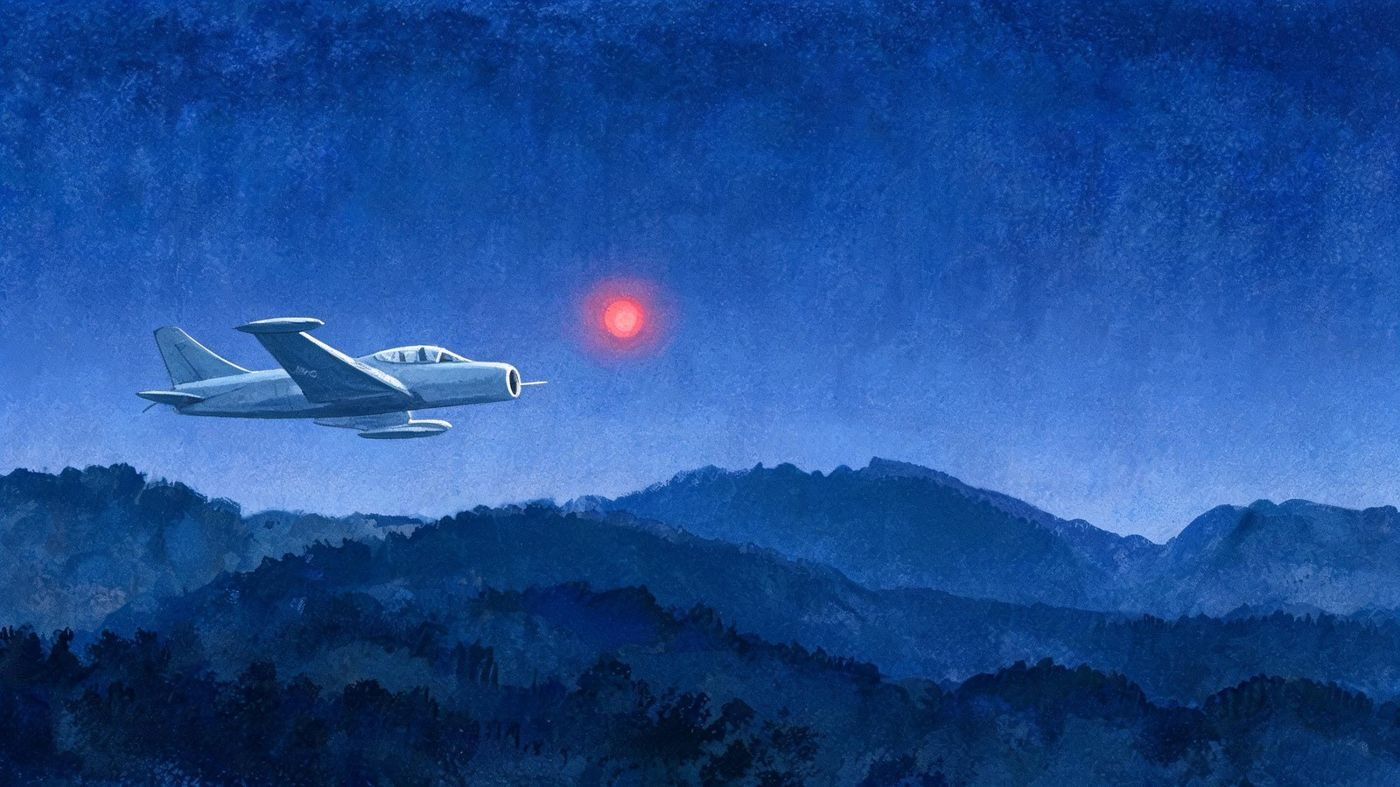
- Ground spotter, radar and two F-84 pilots tracked the same light on 5 August 1953.
- The object held about 3 miles ahead of the jet for some 120 miles on ground radar.
- Ruppelt and Hynek rated it among Blue Book's most puzzling; stars and ghost echoes proposed, not demonstrated.
On the night of 5 August 1953 a Ground Observer Corps spotter in the Black Hills reported a red light to Ellsworth AFB, home of B-36 nuclear bombers. The base radar had a solid target at 16,000 ft in the same spot. An F-84 was vectored onto it and the object pulled away north, staying about 3 miles ahead on the scope for some 120 miles; a second F-84 then chased a light that changed colour and outclimbed him, and Bismarck, North Dakota, later reported a light too. Blue Book's Ed Ruppelt rated it among his best cases and Hynek called it 'one of the most puzzling'.
Evidence, in date order (2)
- Aug 1953Project Blue Book Special/Status ReportofficialAir Force report of the GOC sighting, radar track and both F-84 chases
- J. Allen Hynekexpertcalled it 'one of the most puzzling cases I have studied'
How plausible · High
Ground observer, two radars and two pilots line up in the Air Force's own report; the star-and-ghost-echo explanation does not fit the 120-mile chase.
- ●●Access Air Force radar and interceptors.
- ●●No gain sought Nothing sold.
- ●●Character record Trained GOC spotter, controllers, fighter pilots.
- ●●Independent convergence Visual, radar and air contact together.
- ●●Checkable details check out Blue Book report; Ruppelt; Condon.
- ●●Fits the documented skeleton Nuclear bomber base; Blue Book unknown.
Plausibility weighs how well an account fits where secrecy hides the documents by design, so missing records never count against it. Strength measures what is documented. Assessed 2026-10-23.
On the record
- Blue Book report: 'An airborne F-84 was vectored into the area and after a search made visual contact… Shortly after the visual sighting by the pilot, the target started to move on a heading of about 320 degrees magnetic. Four good blips were obtained… The last blip occurred at 70 miles.' Radar-scope photos were taken but the camera malfunctioned.
- Ruppelt: 'It began to move. The controller saw it begin to move, the spotter saw it begin to move and the pilot saw it begin to move, all at the same time.' The separation 'always remained about 3 miles'.
- Second pilot (Blue Book report): the light was 'considerably brighter than a star', changed from white to green, and seemed to climb faster than he did as he went to 26,000 ft; both blips were on ground radar throughout.
- Hynek: 'one of the most puzzling cases I have studied'.