IM1 (CNEOS 2014-01-08): the "interstellar meteor" and the Pacific spherules
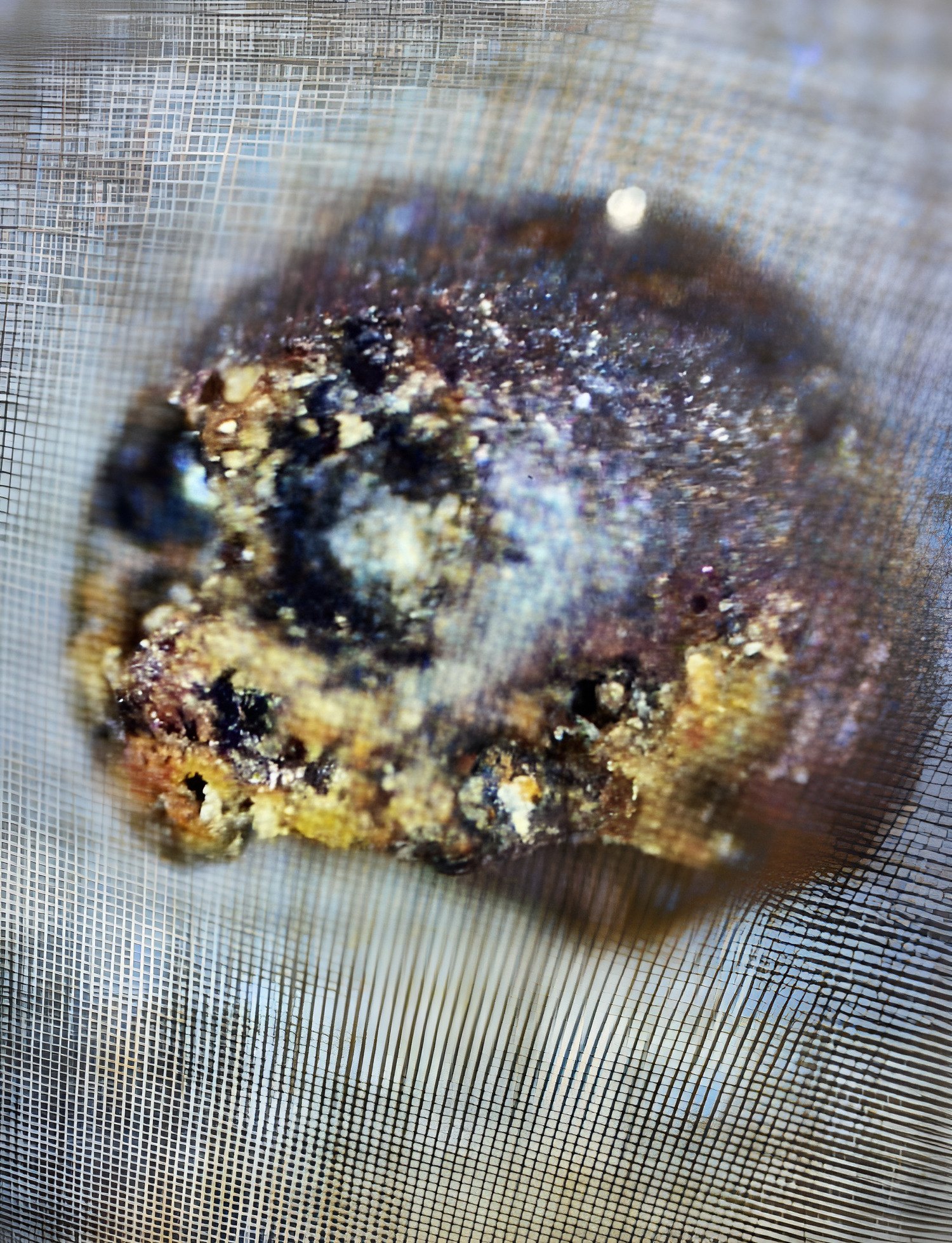
On 8 January 2014, US government sensors recorded a fireball off Papua New Guinea. NASA's CNEOS fireball catalogue lists it with a speed of 44.8 km/s. In 2019 Amir Siraj and Avi Loeb argued from that catalogue entry that the object was on an unbound, interstellar orbit, which would make it the first known interstellar meteor ("IM1"). In April 2022 US Space Command released a memo stating that "the velocity estimate reported to NASA is sufficiently accurate to indicate an interstellar trajectory". The paper then appeared in ApJ (2022), relying on that letter. In June 2023 Loeb's Galileo Project towed a magnetic sled over the sea floor near the computed path. It recovered about 850 small spherules. The team says a subset ("BeLaU", rich in beryllium, lanthanum and uranium) has a composition unlike any known Solar System material, and links them to IM1. Every link in that chain has been challenged in print: - the speed may be overestimated (Brown & Borovička, ApJ 2023); - the seismic signal used to place the fireball was probably a truck (Fernando et al., GJI 2024); - the spherules match coal ash (Gallardo, RNAAS 2023); - the spherules are terrestrial microtektites (Desch 2024, preprint). The Loeb group has replied in RNAAS and Chemical Geology. A third Chemical Geology paper, by an independent team, re-evaluates the spherules' origin.
Evidence, in date order (2)
- Apr 2022U.S. Space Command (Lt. Gen. John Shaw)officialmemo that the velocity estimate indicates an interstellar trajectory Harvard Gazette, "Memo from U.S. Space Command confirms Harvard scientists' findings" (May 2022)
- Jun 2023Galileo Project expeditionphysicalabout 850 spherules recovered from the sea floor near the path Loeb et al. 2024, Recovery and Classification of Spherules (RNAAS 8, 39)
How plausible · High
Official sensor data and a Space Command memo support an interstellar origin, and material was recovered; every link is disputed.
- ●●Access Direct observation or instruments.
- ●●Character record Trained professionals.
- ●●Checkable details check out Released official records.
- ●●Fits the documented skeleton Fits the documented record.
- ●●Physical traces or official reaction Instrument data or physical traces.
- ●○Cost of speaking Named on record.
Plausibility weighs how well an account fits where secrecy hides the documents by design, so missing records never count against it. Strength measures what is documented. Assessed 2026-10-23.
On the record
- The CNEOS entry gives, as queried today: 2014-01-08 17:05:33 UTC, 1.2°S 147.1°E, altitude 18.7 km, speed 44.8 km/s, impact energy 0.13 kt — firsthand (official catalogue) — NASA/JPL CNEOS. Note: Siraj & Loeb give 17:05:34 UTC. Loeb 2024 (arXiv:2403.07696) gives the CNEOS box centre as 1.3°S 147.6°E. The catalogue may have been revised; not checked.
- From the CNEOS data, the authors infer a ~0.45 m meteor on an unbound orbit, with v∞ ≈ 42.1 ± 5.5 km/s outside the Solar System — analysis — Siraj & Loeb 2022 (*ApJ*). The 2019 preprint gave "99.999% confidence".
- The DoD letter states "the velocity estimate reported to NASA is sufficiently accurate to indicate an interstellar trajectory" — secondhand (quoted) — Siraj & Loeb 2022, quoting the US Space Command letter. The *Harvard Gazette* says Lt. Gen. John Shaw signed the memo, and that Joel Mozer, chief scientist of Space Operations Command, reviewed the analysis.
- IM1 ranks first out of 273 CNEOS fireballs in implied material strength, an outlier at 3.5σ — analysis — Siraj & Loeb 2022, *ApJL* 941, L28.
- A seismometer signal localises the fireball to ~16 km² within the ~120 km² box allowed by the DoD coordinates — analysis — Siraj & Loeb 2023 (*Signals*).
- Expedition finds — firsthand (expedition team) — Loeb et al. 2024 (*RNAAS*; *Chemical Geology* 670): a towed-magnetic-sled survey, 14-28 June 2023, about 85 km north of Manus Island; about 850 spherules, 0.05-1.3 mm.
Claims
Where
Similar cases · sharing people, threads, topics or era
People and organizations
Threads · click one to see it on the board
Sources
- NASA/JPL CNEOS Fireball Data API (2014-01-08 entry)
- CNEOS Fireball page
- Siraj & Loeb 2022, ApJ 939, 53
- Siraj & Loeb 2019 preprint
- Harvard Gazette, "Memo from U.S. Space Command confirms Harvard scientists' findings" (May 2022)
- Siraj & Loeb 2022, Interstellar Meteors Are Outliers in Material Strength (ApJL)